The Structural Shift of 2030
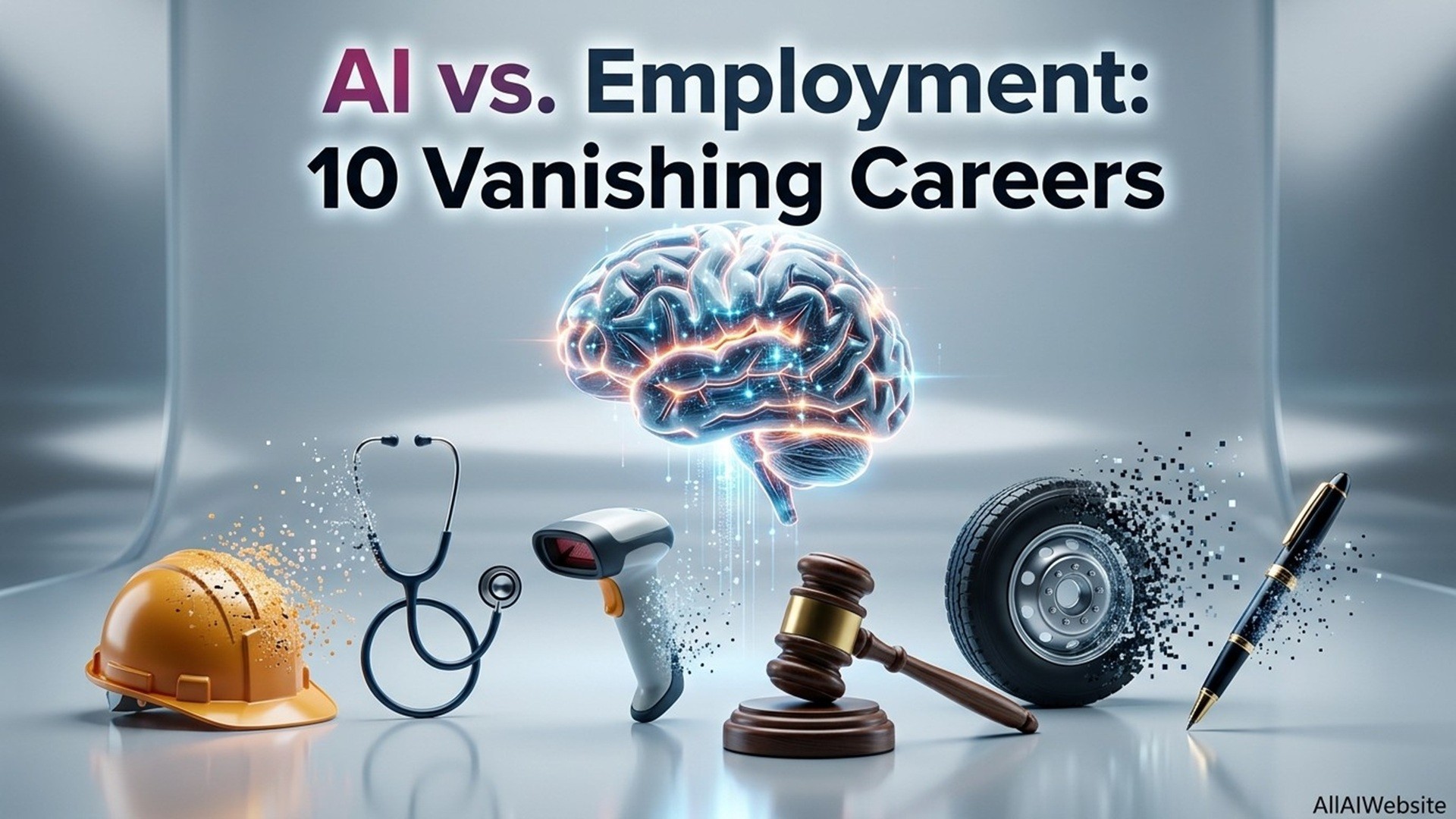
By 2030, the ai impact on job market will result in the displacement of approximately 92 million roles globally, jobs disappearing by 2030 according to the latest World Economic Forum data. However, this isn’t an “end of work” scenario; rather, it’s a massive transition. Employers now expect an even split between human tasks and AI automation. The careers most at risk are those defined by repetitive, rule-based data processing. To survive ai automation, professionals must pivot toward high-demand skills 2030 like technological literacy and creative thinking.
The Pain-Point Narrative: The End of “Entry-Level” Rote Work
For decades, the career ladder began with administrative and analytical “grunt work.” Today, artificial intelligence job loss statistics show that these entry-level rungs are disappearing. In 2025 alone, AI was cited in nearly 55,000 job cuts in the US. The “Selection Paralysis” for students and career-switchers is no longer about which industry to join, but which roles will still exist.
The future of work 2030 isn’t about robots taking every job; it’s about agentic AI mastering the “knowledge work” that once required a degree. To protect your future, you must move from being a “Doer” of tasks to an “Orchestrator” of systems.
The 10 Careers Facing Extinction by 2030
- Customer Service Representatives: AI-driven voice and text agents now handle 90% of repetitive queries without human intervention.
- Bookkeepers & Entry-Level Accountants: AI algorithms ensure 100% accurate data collection and financial reporting at a fraction of the cost.
- Data Entry Clerks: Automation in the workplace 2030 has made manual typing and sorting obsolete.
- Insurance Underwriters: Applying data to set formulas is a task AI now performs with higher precision than humans.
- Proofreaders & Basic Content Writers: While high-level strategy lives on, basic SEO “filler” content and grammar checks are fully automated.
- Receptionists & Office Assistants: Virtual AI avatars now see, listen, and manage scheduling with human-like fluidity.
- Market Research Analysts: AI’s processing power allows for the instant sorting and extrapolation of vast datasets without human assistance.
- Telemarketers & Retail Salespeople: Targeted social media algorithms and AI sales bots have replaced traditional cold-calling and floor retail.
- Basic Legal Assistants: AI handles document discovery and contract review (the “grunt work” of law) faster than a team of paralegals.
- Warehouse Sorting Staff: Robotic retrieval systems and physical AI have automated the Mechanized retrieval and loading process.
Pillar 1: Technical Evolution – Programmers & Developers
The question will ai replace programmers has a nuanced answer. While AI can write 94% of code logic, it only handles 33% of current usage.
The Reskilling Path
In 2026, reskilling for developers 2030 is mandatory. The role is shifting from “Writing Code” to AI tool optimization and ethical AI governance. Will ai replace web developers? Not the ones who master low code no code future of work platforms and focus on high-level software architecture.
Pillar 2: Creative & Marketing Shift – Content & SEO
Is content writing dead? No, but “average” content writing is. The future of freelancers in ai economy depends on their ability to provide “Context-Rich” work that AI cannot simulate.
SEO Relevance in 2030, jobs disappearing by 2030
Is seo still relevant in 2030? Yes, but it has shifted to “Generative Engine Optimization.” Digital marketers must now focus on creative thinking and leadership—skills that augment AI rather than compete with it. Digital marketing jobs in 2030 will revolve around data storytelling and managing AI-driven campaign ecosystems.
The 2030 Career Survival Matrix
| At-Risk Career | The AI Replacement | The 2030 Pivot (Safe Role) | Essential Skill |
| Accountant | Automated Bookkeeping | AI Financial Strategist | Analytical Thinking |
| Writer | Generative Drafts | AI Content Orchestrator | Creative Thinking |
| Coder | AI Code Generators | AI Solutions Architect | Technological Literacy |
| Analyst | Predictive Models | AI Data Storyteller | Emotional Intelligence |
| Support | Agentic AI Bots | Customer Experience Lead | Social Influence |
Architect’s Tip: Future-Proofing Your Skillset
To stay ahead of unemployment due to ai 2030, focus on the “Three Pillars of Resilience”:
- Technological Literacy: Understand how to design, train, and govern AI tools.
- Agility & Agility: Be ready to pivot your role every 2-3 years as models evolve.
- Cross-Disciplinary Collaboration: The most in demand skills 2030 involve connecting AI insights with human business goals.
The Architect’s Rapid-Fire Resolution Engine: 10 Critical Questions
- What jobs will AI replace by 2030?
Repetitive, knowledge-based roles in finance, administration, and basic customer service are the most susceptible.
- Are creative jobs safe from AI?
Purely technical creative work (like basic layout) is at risk, but work requiring high emotional or social intelligence remains safe.
- Will AI replace project managers?
Can ai replace project managers? Only the ones who just track tasks. Success in 2030 requires talent management and change management.
- What are the best industries to work in 2030?
Medical and healthcare services, environmental stewardship, and advanced manufacturing (robotics) are high-growth sectors.
- How to protect your business from AI disruption?
Invest in reskilling your staff to become “AI Orchestrators” rather than just users of the tools.
- Is data science a good career for 2030?
Yes, but the focus has moved from “building models” to interpreting complex datasets and ethical AI.
- Which white-collar jobs are most at risk?
Insurance underwriting, tax preparation, and payroll staff face high displacement risks from agentic AI.
- Will AI take my marketing job?
Not if you focus on strategic communication and scenario planning rather than just execution.
- What are the skills to learn for 2030?
AI & Big Data, Cybersecurity, and Creative Thinking are the top three priorities for employers.
- How can I find high-paying jobs for 2030 without a degree?
Roles in advanced manufacturing, robotics maintenance, and ESG reporting are increasingly valuing skills over diplomas.
The Verdict: Jobs disappearing by 2030
To summarize, the jobs disappearing by 2030 are those where humans acted as “Biological APIs”—processing data from one point to another. In 2026, the only way to survive ai automation is to ascend. You must stop performing the task and start managing the system that performs the task. The future of work 2030 is largely human, but only for those who embrace the role of the AI Orchestrator.
Effortless Discovery at AllAIWebsite.com
Navigating the ai impact on job market is daunting. At allaiwebsite.com, we’ve curated the careers of the future 2030 and the tools you need to master them. We make reskilling for developers and marketers effortless. Stop fearing the future of work 2030 and start building your “Power Stack” today.